
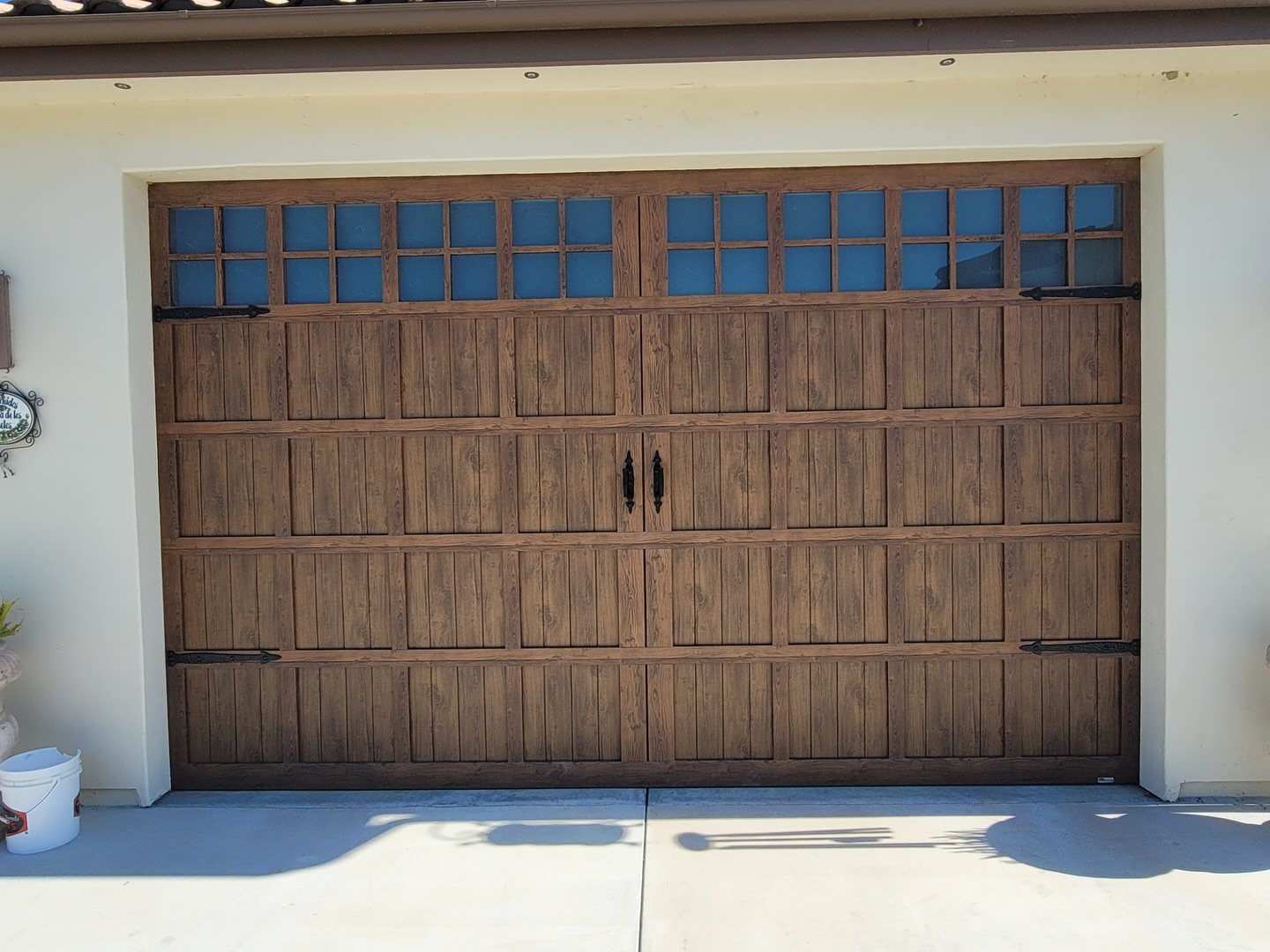

Your garage door is the heaviest thing that moves in your house, and most people never think about it until it quits or somebody gets hurt. After 30 years of doing this on the Central Coast, I'll tell you the doors that hurt people are almost always the ones nobody looked at. You don't need to be a technician to stay ahead of it. You just need to know what to check, how often, and when to call somebody. Here's what I tell my own family.
Test the auto-reverse every month
Every door built since the early 1990s is required by federal law and the UL 325 standard to reverse when something's underneath it. That's the system that keeps a 300-pound door off a kid, a pet, or your car's bumper. Testing it takes 30 seconds.
Lay a roll of paper towels or a flat 2x4 on the floor right where the door closes, then hit the button. When the door touches it, it should stop and go back up. If it keeps pushing down, or it doesn't reverse cleanly, the safety is out of adjustment or failing. Stop using the opener and get it looked at. This is the single most important safety check on the door, and the one almost nobody does.
Check the photo eyes
Down near the floor on both sides of the opening you've got two small sensors pointed at each other. They're the backup to the auto-reverse: break that invisible beam and the door won't close. Knock them out of line, let them get dusty, or let the afternoon sun hit them wrong, and the door either won't close or closes and pops right back up.
Wipe the lenses, make sure they're pointed straight at each other, and check that both little lights are steady, not blinking. Honestly, half the "my door won't close" calls we run are just a bumped sensor. Two minutes with a rag saves you a service call.
Leave the springs alone
The springs above the door are under enormous tension. That's what makes a heavy door feel light, and it's also what makes them dangerous. When a wound spring lets go, it does it with a bang, and people get hurt trying to fix or adjust them with the wrong tools. This is the most common cause of serious garage-door injuries we see.
Signs a spring is going: the door suddenly feels like it weighs a ton, one side hangs lower than the other, or you can see a gap in the coil. Don't force it and don't try to swap it yourself. Spring work is exactly the kind of job worth hiring out. We carry the common sizes on the truck, so it's usually a same-day fix. If you want to read up, the DASMA industry association and the U.S. Consumer Product Safety Commission both have plain-English garage-door safety guidance.
A few more that take two minutes
While you're out there: watch the cables running down each side to the bottom brackets. Those brackets are under spring tension too, which is why the sticker says not to remove them. A frayed cable or a door sitting crooked is the door warning you. Catch it early and it's a small repair; ignore it and the door comes off the track. And once a year, run the balance test: pull the release, lift the door halfway by hand, and let go. A healthy door holds where you leave it.
When to just call
If the door's loud, jerky, off-balance, or the safety won't reverse, don't babysit it. Those are the doors that turn into a broken spring on a Monday morning when you're trying to get to work. Call somebody local who'll actually show up. We answer the phone here in Hollister, and most of this is a quick fix if you catch it before it fails.
Want a professional set of eyes on it? A yearly maintenance tune-up covers every one of these checks, or if something's already off, here's our garage door repair and spring replacement service. You can also just call us for a free estimate.
Frequently asked questions
- How do I test my garage door's safety sensors? Lay a 2x4 or a roll of paper towels flat where the door closes and press the button. It should reverse the moment it touches. If it doesn't, stop using the opener and have it serviced.
- Why does my garage door open back up when I try to close it? Nine times out of ten it's the photo eyes near the floor: bumped, dirty, or out of alignment. Wipe them, aim them at each other, and check for a steady light.
- Is it safe to replace a garage door spring myself? No. A wound torsion spring stores enough energy to badly injure you. It's the repair we most strongly recommend hiring out.